French Drains, Your PNW Garden Staple
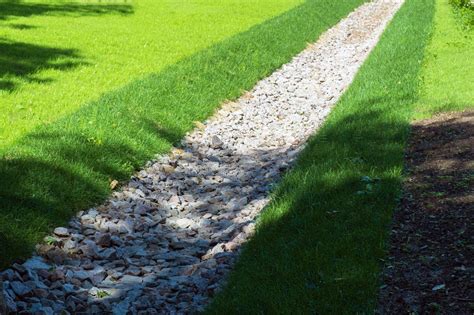
How to Build a French Drain
A French drain is a simple underground drainage system that redirects water away from areas prone to pooling or moisture problems. Here's how to install one along a lawn or pathway.
Materials You'll Need
- Shovel or spade
- Measuring tape
- Level
- Landscape fabric
- Perforated drain pipe (3 or 4" diameter is standard)
- Gravel or crushed stone
- Optional: geotextile filter cloth, sand, river rocks
Step-by-Step Installation
1. Plan Your Route
Determine where water accumulates and where you want it to drain. The drain must slope downward — ideally at least 1/8 inch per foot (or a 1% grade) toward the exit point. Mark the path with spray paint or chalk.
2. Dig the Trench
Dig a trench along your marked line, about 12 to 18" deep and 6 to 12" wide. Use your level frequently to ensure the trench slopes consistently toward the drainage outlet. The deeper and wider you go, the more water it can handle.
3. Lay Landscape Fabric
Line the trench with landscape fabric to prevent soil from clogging the drain system. Overlap the fabric on both sides of the trench so it can fold over the top later.
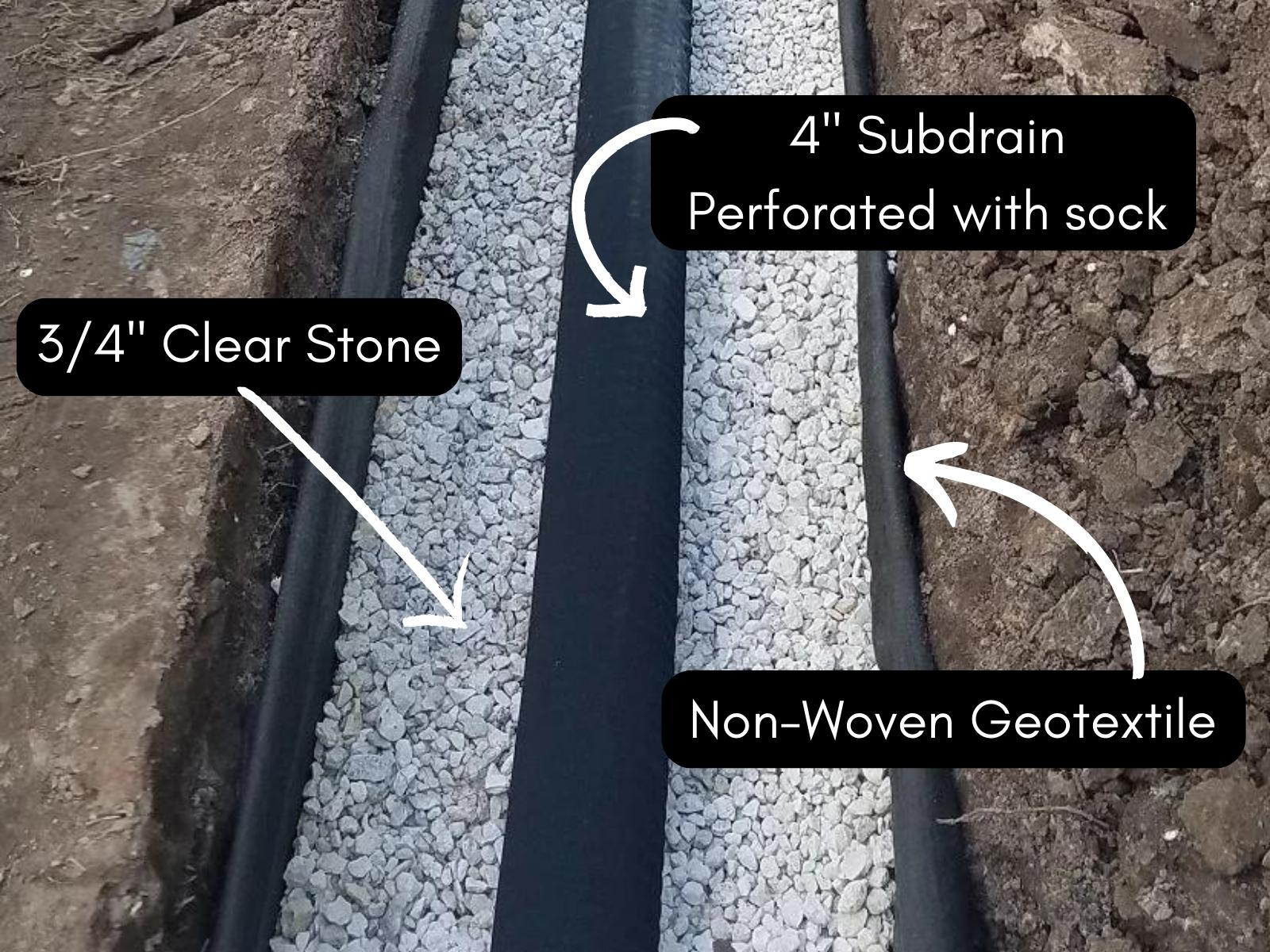
4. Add a Gravel Base
Pour 2 to 3" of gravel into the bottom of the trench. This helps with drainage and stabilizes the pipe.
5. Install the Drain Pipe
Place the perforated drain pipe on top of the gravel base, with the perforations facing downward or to the sides (not upward). This allows water to seep into the pipe from surrounding soil.
6. Cover the Pipe
Add 4 to 6" of gravel over the pipe. This layer allows water to flow freely toward the perforations.
7. Fold the Landscape Fabric Over
Pull the landscape fabric up and over the gravel to keep soil from filtering down into the drain system.
8. Backfill and Finish
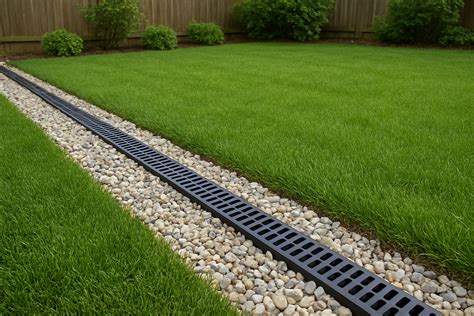
Cover the fabric with soil and sod (if along a lawn) or pavers (if along a pathway). Tamp down gently to avoid compacting too much, which could restrict water flow.
9. Direct the Outlet
Ensure the drain pipe exits at a lower elevation than the problem area — ideally toward a drainage ditch, storm drain, or downhill slope away from structures.
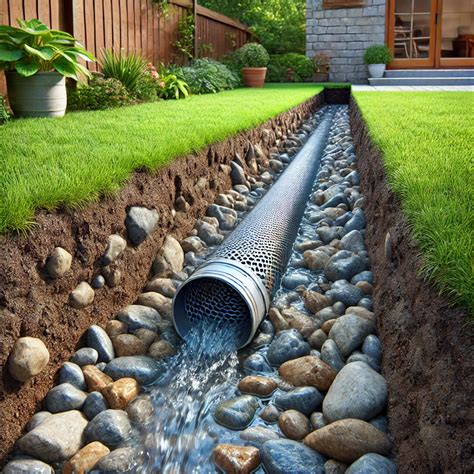
Optional: Exposing River Rocks
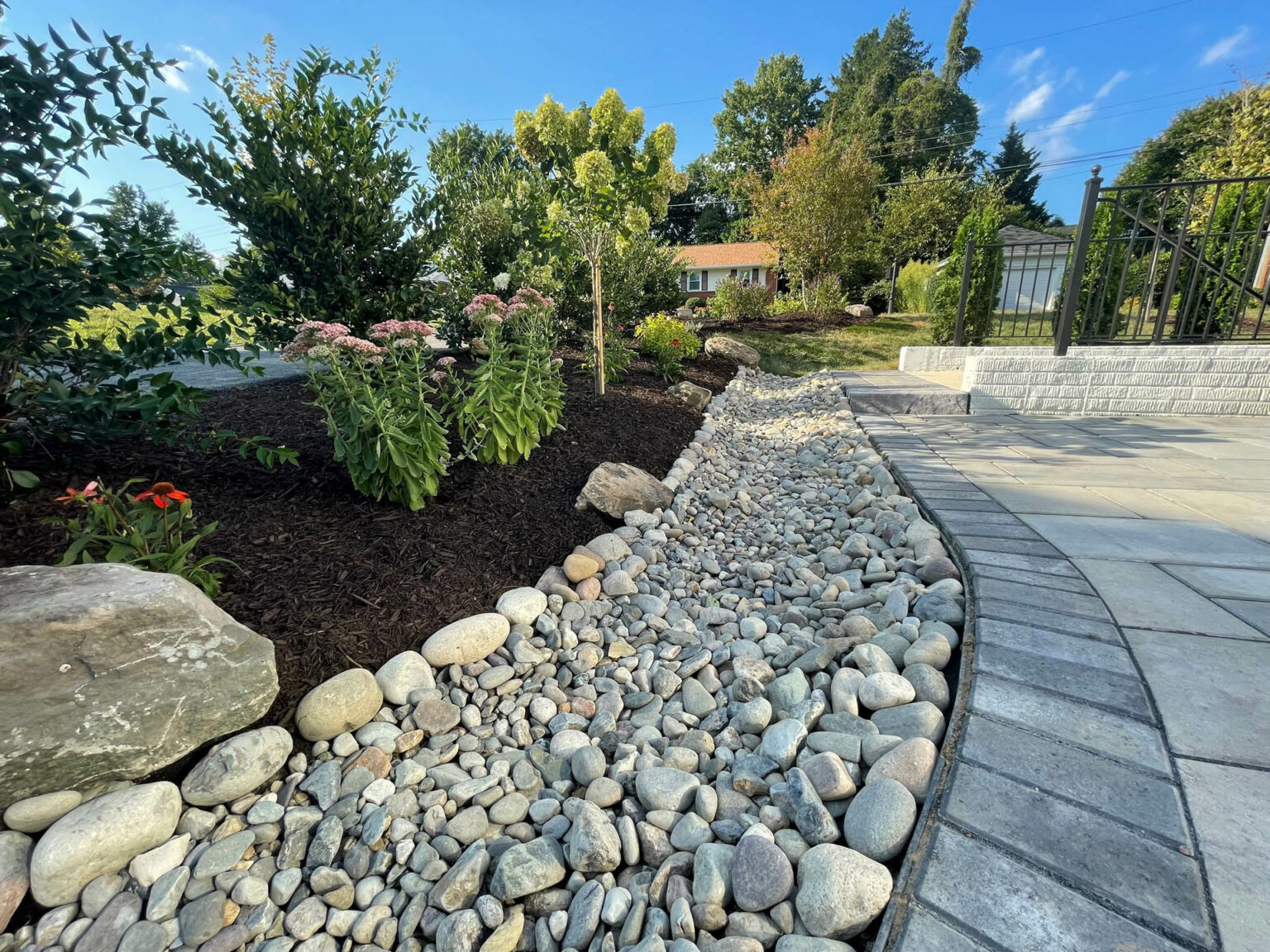
In some situations, you may want to leave the French drain partially or fully exposed with decorative river rocks on top instead of burying it completely. This works well when:
- The drain runs through a garden bed or landscaping feature where you want a visual accent
- You're creating a dry creek bed aesthetic that blends drainage with landscape design
- The area is low-traffic and doesn't need a finished lawn or walkway surface
- You want easier access for future maintenance or cleaning
To do this, skip the final soil backfill after folding the landscape fabric. Instead, cover the fabric with larger river rocks or decorative stones in your choice of color and size. This creates an attractive, functional element that guides water visually while serving its drainage purpose. The rocks also help prevent soil erosion and can complement modern or naturalistic garden designs.
Tips for Success
- Test the slope by pouring water into the trench before completing the installation to confirm proper drainage.
- Use a filter cloth around the pipe if you're concerned about sediment, but it may require occasional maintenance.
- Consider the water volume — if you're dealing with heavy runoff, use a wider trench or larger pipe.
- Keep records of where you buried the pipe to avoid hitting it during future landscaping.
- A well-built French drain can last 20-30 years with minimal maintenance and will significantly reduce waterlogging and erosion problems.
Why Is It Called a French Drain?
The name's origin is uncertain, but the most widely accepted explanation is that it's named after Henry French, a 19th-century Massachusetts farmer who popularized the technique in his 1859 book on farm drainage. Though he didn't invent it, similar drainage systems had been used for centuries, his work made it widely known.
Alternative theories suggest the name comes from France, where similar drainage systems were used, or simply developed as a way to distinguish this underground method from older, more visible drainage ditches.
Ironically, despite the unclear origins, French drains have become one of the most popular residential drainage solutions for over 150 years.
French draindrainageclay soilpnwrain