Invasive PlantsJune 27, 2026
Japanese Knotweed: How to Identify and Stop It Before It Takes Over
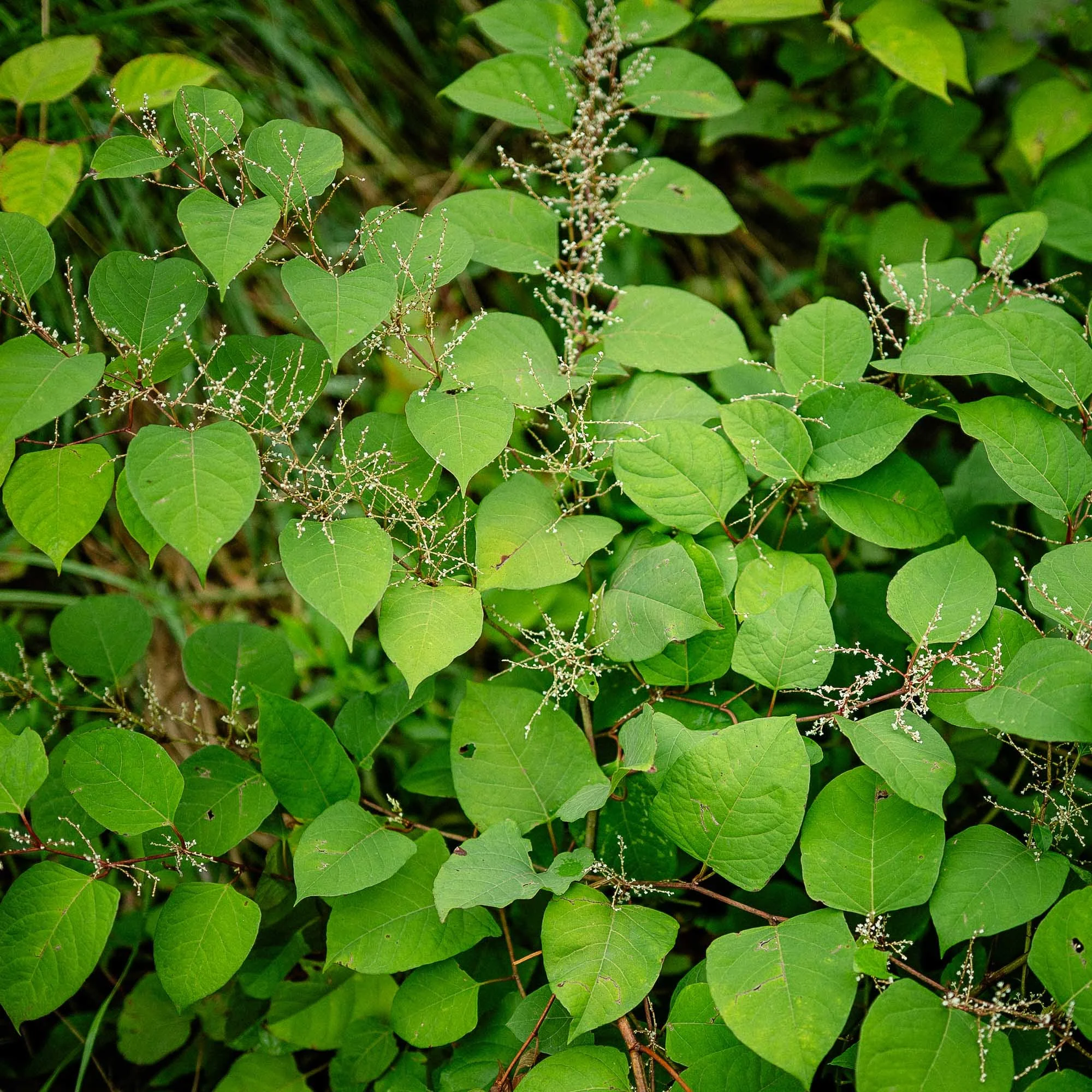
Japanese knotweed (Fallopia japonica) is one of the most aggressive invasive plants in the Portland area and one of the hardest to get rid of once it's established. It spreads through underground rhizomes that can reach 10 feet deep and 65 feet wide, and even a small fragment left in the soil will regrow.
How to identify it
Look for hollow, bamboo-like stems with purple-red speckles, large heart-shaped leaves, and clusters of small white flowers in late summer. It dies back in winter but re-emerges fast in spring, often reaching 6–10 feet tall by June.
Why it's a problem in Portland
It thrives in our wet winters and mild springs. It's commonly found along the Willamette River banks, roadsides, and disturbed soils but it spreads easily into garden beds, especially after soil is moved or brought in.
What to do
- Don't compost it. Bag and dispose of it in the trash: fragments can survive composting.
- Cut it repeatedly. Mowing or cutting stems to the ground every 2–3 weeks through the growing season exhausts the root system over time. Expect 3–5 years of persistence.
- Herbicide for severe infestations. Glyphosate applied in late summer (when the plant is moving energy back to its roots) is most effective. Oregon requires a permit for treatment near waterways.
- Report it. Oregon has an invasive species reporting tool through the Oregon Invasive Species Council.
Patience is key, there's no quick fix, but consistent removal does work.
japanese knotweedinvasive plantsportland weedsweed control